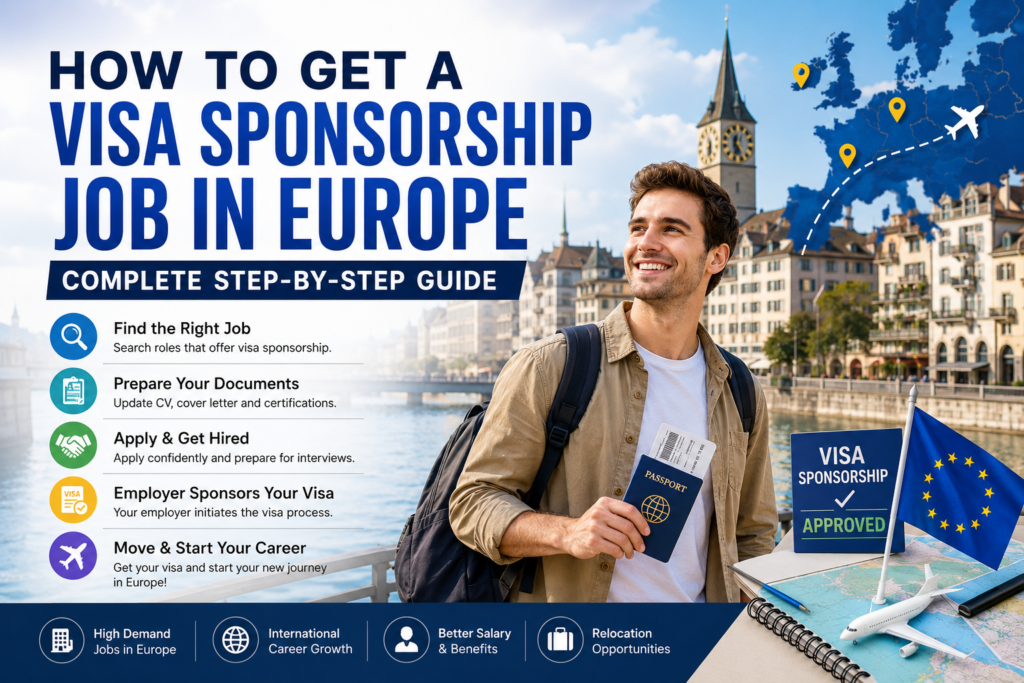
My cousin called me last year in a panic. She’d just gotten laid off, had maybe four months of savings left, and had convinced herself that moving to Europe for work was basically impossible unless you had a cousin who was already a citizen there (she doesn’t, by the way, since I’m not one either).
I told her what I’m about to tell you. It’s not impossible. It’s just a process that nobody explains properly, and most of the information floating around online is either outdated, written by someone who never actually did it, or vague enough to be useless.
I went through this exact process two years back. It took me longer than I expected, I made a couple of dumb mistakes along the way, and I ended up somewhere I hadn’t even originally planned to apply. So consider this the guide I wish someone had handed me before I started.
Why This Feels Harder Than It Actually Is
The confusion mostly comes from mixing up three completely different things: tourist visas, work permits, and sponsorship. People Google “visa sponsorship jobs” expecting a magic list of companies handing out visas like candy. That list doesn’t exist because sponsorship isn’t a marketing gimmick — it’s a legal process a company goes through because they specifically need you and can’t find someone locally with your skills.
Once I understood that, the whole search got a lot less overwhelming. I wasn’t hunting for charity. I was looking for companies that had an actual gap they needed filled, and positioning myself as the answer to that gap.
Step 1: Figure Out If You’re Actually “Sponsorship Material” Yet
This step stung a little when I first went through it. I had to sit down and honestly evaluate whether my experience, degree, and skills matched what shortage-occupation countries were actually looking for.
Germany, for example, publishes something called the “Shortage Occupation List” that names specific job categories — IT specialists, engineers, healthcare workers, tradespeople like electricians and plumbers. The Netherlands has something similar tied to their “knowledge migrant” scheme, which sets a minimum salary threshold instead of a job list.
If your role isn’t on a shortage list and doesn’t meet a minimum salary requirement, you’re not locked out, but your odds get a lot harder. I originally had two years of experience in marketing, which wasn’t in high demand anywhere in Europe at the time. I ended up pivoting toward a digital marketing role with an e-commerce company that specifically needed English-speaking marketers for their international expansion — a niche within a niche, but it worked.
Step 2: Understand the Visa Types You Might Actually Qualify For
I wasted weeks confused about which visa applied to me. Here’s the breakdown that would’ve saved me time:
- EU Blue Card – for people with a university degree and a job offer meeting a minimum salary. Works across most EU countries, and it’s honestly one of the most flexible options long-term since it allows easier movement between EU countries later.
- National Skilled Worker Visas – countries like Germany, Austria, and Ireland have their own versions separate from the Blue Card, often for roles that don’t require a university degree (skilled trades, for example).
- Job Seeker Visa – lets you fly to a country like Germany or Austria and search for work in person for up to six months. You still need to find a job before this visa runs out, but it removes the “no European address” problem recruiters sometimes silently hold against you.
- Intra-Company Transfer Visa – if you’re already working for a multinational, ask HR if there’s an internal transfer option to a European office before job hunting externally.
Step 3: Build a CV That Doesn’t Get Filtered Out Immediately
I found out the hard way that my resume format was working against me. In the US it’s normal to keep things to one page, skip a photo, and use vague achievement bullet points. In much of Europe, especially Germany and Austria, recruiters expect more detail — sometimes a photo, a clear timeline with no gaps, and specific dates for every role.
I switched to using Europass, the EU’s free CV builder, and noticed a real difference in response rates within a few weeks. It’s not the prettiest design tool out there, but recruiters recognize it instantly and know exactly where to look for what they need.
Step 4: Search Smarter, Not Just Harder
I used to just type “jobs in Europe” into every job site I could find and apply blindly. That got me almost nowhere. What actually worked:
EURES – the EU’s official job mobility platform. It’s specifically designed to connect job seekers across borders with employers open to hiring internationally.
LinkedIn advanced search – instead of generic searches, I typed things like “visa sponsorship” Netherlands marketing and used the location filter set specifically to the country, not “Europe” broadly.
Xing – if you’re targeting Germany or Austria specifically, this local professional network is used more than LinkedIn in some industries there.
Company career pages – I found my actual job by going directly to a company’s careers page after seeing them mentioned in a local news article about their expansion plans. Job boards are often a step behind what companies post internally.
Relocation-focused recruitment agencies – agencies like Michael Page and Hays have teams that specifically handle cross-border relocation hires. A recruiter from one of these agencies actually pushed my profile forward when I probably would’ve been filtered out by an automated system otherwise.
Step 5: Prep Your Documents Before You Need Them, Not After
This is the step that cost me almost a month of delay the first time around. Once you get an offer, the visa clock starts ticking, and scrambling to get documents ready at that point slows everything down.
Get these sorted in advance:
- Degree certificates apostilled (a legal authentication process — check your country’s specific apostille office)
- A recent police clearance certificate
- Passport with several months of remaining validity
- Translated versions of key documents if the destination country requires them
I didn’t realize apostille processing could take two to three weeks in some countries, and it delayed my start date by almost a month. Don’t make that mistake.
Step 6: Handle the Sponsorship Conversation With Confidence, Not Apology
A lot of people tiptoe around mentioning they’ll need visa sponsorship, almost like it’s a confession. I used to do this too, waiting until the last possible interview round to bring it up out of fear it would tank my chances.
It’s actually better to mention it early and matter-of-factly. Something like: “I’ll need visa sponsorship for this role, and I understand that involves the company covering the work permit process.” Companies that are seriously open to sponsoring international talent have handled this before and won’t be scared off by directness. If a company disappears the moment you mention it, you’ve just saved yourself weeks of wasted effort chasing something that was never going to happen.
Step 7: Nail the Interview With Region-Specific Expectations
European interviews, especially in Germany and the Nordic countries, tend to be more direct and less about “selling yourself” in the way American interviews often are. I over-prepared with enthusiastic buzzwords the first time and got feedback later (through the recruiter) that it came across as slightly insincere.
Simple, specific, and honest answers tend to land better. Talk about actual outcomes from past roles instead of leaning on personality-driven pitches.
Step 8: Once You Get the Offer, Read the Sponsorship Terms Carefully
This part matters more than people realize. Ask specifically:
- Does the company cover the full visa and legal processing fees?
- Is there a minimum contract period tied to the sponsorship (some companies require you to stay a set number of months or repay costs if you leave early)?
- Do they handle relocation logistics like flights or temporary housing, or is that on you?
I almost signed an offer once without asking about the minimum contract clause, and it turned out I would’ve owed the company a portion of the visa costs back if I left within the first year. Not a dealbreaker necessarily, but something you want to know upfront instead of discovering later.
Real Scenarios That Show How Different This Can Look
A former coworker of mine, a software developer, got his EU Blue Card sponsored by a fintech startup in Berlin. The whole process, from signed offer to actually landing in Germany, took about twelve weeks. The company handled everything, including translating his degree certificate.
Someone I met through an expat forum works in hospitality management and got sponsored through Portugal’s D2 visa pathway (used for entrepreneurs and specific skilled roles), after a boutique hotel group there specifically wanted someone with international guest experience.
My own path ended with a digital marketing role at a mid-size e-commerce company in the Netherlands. Not glamorous, not what I originally pictured, but it got me there, and once I had EU work experience, doors opened faster for future moves.
Mistakes That Are Easy to Avoid Once You Know About Them
Applying only to giant, famous companies. Everyone does this, which means competition is brutal and sponsorship budgets are often reserved for internal transfers. Mid-size, growing companies often have more urgency and less competition.
Ignoring smaller or less “trendy” countries. Poland, Estonia, and Portugal have real, growing demand in tech and skilled trades with noticeably less competition than Germany or the Netherlands.
Not asking about sponsorship terms before signing. Get clarity on repayment clauses and minimum contract periods before you commit.
Skipping local language classes entirely. Even if the job itself is in English, basic language skills help enormously with visa renewals, family visas later, and honestly just day-to-day life once you land.
Trusting anyone who asks for payment to “guarantee” a sponsorship job. Legitimate sponsorship never requires you to pay for the job itself. If money is flowing toward you paying someone for a guaranteed placement, that’s a scam every time.
Final Thoughts
Looking back, the whole process took me about seven months from the day I started seriously applying to the day I actually landed. Most of the delay came from wasted effort early on, applying to companies that were never going to sponsor anyone and misunderstanding which visa category actually applied to my situation.
If you go in with a clear idea of your target country, your visa category, and your documents ready ahead of time, you can cut that timeline down significantly. It’s not luck. It’s mostly just knowing where to look and being upfront about what you need instead of hoping it works itself out.
If you’re in the middle of this right now, keep going. It’s a slower process than people make it sound, but it’s a lot more doable than it feels at 2 AM with fifteen tabs open and no idea where to start.